
NEWS
Air Filters vs. Air Cleaners
Our highly climate-controlled indoor environments can often be extremely comfortable in our modern world. Combine that with the fact so many of our daily needs are easily met without needing to go outside, and you find a society that spends nearly all its time indoors. As a result, poor indoor air quality has become a significant area of concern as a contributor to potential health problems.
Our team at Air Care Heating & Cooling, along with many manufacturers of air filtration and air purification products, are working to provide tools to help you ensure clean indoor air for you and your family. Here are some details about currently available solutions.
Air Filters
Air filters are typically a part of your Saratoga home’s heating, ventilation, and air conditioning (HVAC) system. Before circulating air enters your furnace or air conditioner to be heated or cooled, it passes through a filter to trap and remove a wide range of particulates.
Many different types of air filters are available, ranging from very basic and inexpensive to more costly versions that filter out microscopic particles.
An industry-wide rating system promoted by the American Society of Heating, Refrigerating, and Air Conditioning Engineers (ASHRAE) helps consumers compare one type of filter to another in terms of performance. A minimum efficiency reporting value (MERV) rating system measures a filter’s ability to remove particles from the air. Filters carry a rating somewhere between 1 and 16, with the higher values signaling finer filtration.
Air filters can be made of many different types of materials. You may have used a layered fiberglass filter that’s surrounded by a metal grate or a pleated polyester filter in a cardboard frame. These filters typically need to be replaced every one to three months.
Homeowners living in California who have family members with allergies, asthma, or other respiratory illnesses may want to consider using a high efficiency particulate air (HEPA) filter. These filters capture 99.97 percent of all particles 0.3 microns or larger. The National Air Filtration Association (NAFA) specifies six different levels of HEPA filters.
Air Cleaners
Air cleaners are often used in conjunction with HVAC-related air filters. These are usually separate appliances typically designed for a single room or a certain square footage of space. A wide variety of different technologies and systems are available, and each one usually focuses on a particular set of particles.
For example, home ultraviolet (UV) air cleaners were developed from purifiers used in hospitals for disinfecting the air. These tackle bacteria, viruses, mold, and other pathogens. On the other hand, activated carbon filters are very effective in removing gasses, odors, smoke, and other particles.
HEPA air purifiers work in a similar way to HEPA filters and remove dust, pet dander, pollen, and mold spores from your indoor air. Although HEPA air purifiers are effective at filtering out very small particles, they are unable to remove bacteria and viruses.
Another type of air purification technology is using ions. These purifiers emit negative ions into your living space, which attract positive ions like dust. The resulting particles become heavier and land on your home’s flooring or other surfaces to be collected during vacuuming and dusting chores. Remember to use a HEPA vacuum bag to maximize the capturing of the resulting particles.
Although all of these air purification systems typically work in a single area or confined space, you can invest in house-wide purification systems as well. For instance, electronic air cleaners work with your HVAC system by employing static electricity, HEPA filters, and ionic cleaners in a single system. Centralized air cleaners can be installed as part of your ductwork and can complement your HVAC filtration system, and air-to-air exchange systems will allow you to pull in more fresh air from outside.
Contact Us for Clean Indoor Air
At Air Care Heating & Cooling here in Saratoga, CA, our professionals can provide more details about air filters and air purification systems. Our trained team can help you choose an air treatment system that can meet the needs of you and your family. Call us at 408.463.6957 or request service online today.
Heat Pump Maintenance Tips
Most of us tend to take our heating, ventilation, and air conditioning (HVAC) systems for granted. As long as they are working, it’s easy to go on day after day without thinking about them. But, like most other things, taking care of your HVAC system through regular maintenance is critical to keeping it in good working order.
Many San Jose homeowners today have installed a heat pump to handle their heating and cooling needs. If you have a heat pump, you’ll want to be aware of some special considerations when it comes to regular maintenance issues. Our team at Air Care Heating & Cooling offers the following information and tips to help.
Heat Pump Basics
Let’s start with understanding a little bit about how a heat pump operates. Heat pumps are typically more popular in areas with milder temperatures. They operate by essentially moving heat from outside to inside in the winter and inside to outside in the summer.
Since heat pumps do not have to generate heat by consuming electricity, natural gas, propane, or another fuel, they are more energy efficient. According to the US Department of Energy (DOE), heat pumps may reduce your electricity usage by nearly 50 percent when compared with furnaces or baseboard heating units.
Heat pump technology continues to develop, and high-efficiency units can now operate reasonably well in climates with more extreme temperatures.
Air Filter Changes
One of the easiest maintenance tasks you can perform is to change your air filter regularly. Just like in all HVAC systems, the air filter in a heat pump is responsible for cleaning the heated or cooled air before it’s delivered to the rooms of your California home.
Basic air filters will remove larger particles of dust or dirt that float through the air. Choosing a high-efficiency filter like a high-efficiency particulate air (HEPA) filter will remove most of the smallest particles including pet dander, pollen, and dust mites.
Clean air filters not only result in better air quality but also help your heat pump operate more efficiently. That means lower energy bills and a longer equipment life span.
Proper Installation
Hopefully your heat pump was installed properly originally, but it’s not a bad idea to double check some important requirements. First, your heat pump should be at least four to six inches off the ground. This helps ensure the unit is not obstructed by the ground itself and allows for proper drainage.
Second, your heat pump should not sit under a leaking gutter. If your gutter began to leak after your heat pump was installed, you may want to prioritize that repair for the sake of both your gutter and heat pump.
Provide Plenty of Room
If your heat pump gets covered in snow, ice, overgrown plants, or yard debris, it will malfunction. It’s a good idea to spend some time inspecting the area around your unit during every season.
During the winter, snow or ice that accumulates on the heat pump must be removed. If a normal thaw or a simple brushing is not enough, you’ll want to turn off your unit and allow it to completely power down.
At that point, you can pour warm (not hot) water over the unit to melt the snow and ice. Be sure not to try to chip off the snow or ice using any type of tool, because you can easily damage the heat pump. Once the unit is clear of snow and ice, turn it back on.
In the other seasons, be sure to keep weeds, grass, and other nearby growth trimmed and out of the way. You’ll also want to clean things like fallen leaves, stray branches, or other yard debris that may gather on top of or under your heat pump.
Be Gentle During Cleaning
If you want to wash off your heat pump in the warmer weather, be sure to use your garden hose, not a power washer. The fins on the heat pump coil are delicate, and a jet of water can easily damage them. At the same time, it’s important to keep the outside of your unit clean and free of dirt, cut grass, or other debris.
Rely on the Professionals Annually
Since heat pumps operate on a 240-volt circuit, they are extremely dangerous for amateurs to work on. It’s a good idea to have your unit inspected, professionally cleaned, and tuned up annually by one of our trained and certified HVAC professionals.
Our experienced technicians will inspect your entire heat pump system including ductwork, airflow, refrigerant charge, electric terminals, thermostat, and more. A regular maintenance call will go a long way in helping to keep your unit operating well all year long.
Contact Us for Your Heat Pump Needs
Our team at Air Care Heating & Cooling in San Jose, CA, is ready and waiting to help you with heat pump maintenance. Call us at 408.463.6957 or request service online today.
Fall HVAC Maintenance
As the saying goes, “Time and tide wait for no one.” Whether you’re prepared or not, the summer months and warmer weather are gone, moving aside for fall and cooler temps. That means here in Santa Clara you need to think about preparing your heating, ventilation, and air conditioning (HVAC) system for fall maintenance.
Maintaining your heating and cooling equipment ensures it’ll run smoothly the way it should when you need it. Investing your time and money in these seasonal maintenance tasks goes a long way to protect both your California home and your HVAC investment, including your wallet. Well-running systems are more energy efficient, so they end up costing you less to run all season long.
Fall Maintenance for Your Air Conditioner
Just because you won’t be turning your air conditioner on now doesn’t mean you should forget about it til the spring and summer months. Part of protecting your home and equipment is winterizing your cooling system.
If you’ve already had your air conditioner cleaned and checked by our Air Care Heating & Cooling professionals before you used it this year, you can simply ask our heating and cooling professional to winterize your unit while he or she is out cleaning and checking your furnace. You can compare the maintenance checklist to what ENERGY STAR® recommends.
Things you can do yourself:
- Clean off the outside unit (condenser) from debris and dirt. If involving water in the process, be sure to switch off the unit’s power or the circuit first.
- Remove any branches, tall grass, or brush within a four-foot proximity to the unit.
- Insulate any exterior-exposed pipes with foam pipe covers, wrapping them with duct tape.
- Cover the unit with a plastic or vinyl cover. Some folks have an air-conditioner-specific cover. If you don’t, you can use a tarp. Be sure to secure the cover, in whatever form, with bungee cords or vinyl rope. Perform this step after your HVAC technician has already done his or her part in the winterization process.
Things to ask your technician to do:
- Clear drain lines and pipes to avoid having standing water in your system all winter.
- Clean the coil from dust and dirt.
- Check the refrigerant charge, belts and pulleys, and ducts.
- Clean and check the entire system if you haven’t had it done yet this year.
Fall Maintenance for Your Heating System
You should schedule your annual maintenance appointment for your heating system before you use it for the season, regardless if you have a furnace, boiler, or heat pump. This appointment shouldn’t be skipped, as keeping your heating system in good order will be sure it’s ready when you need it and keep it functioning properly throughout the season for you.
Things you can do yourself:
- Stock up and change your filters every three months, but if you have allergy issues, monthly is advised.
- Vacuum your vents to keep them clear of dust, avoiding extra filter buildup or decreased indoor air quality (IAQ).
Things to ask your technician to do:
- Clean and check your heating system, including (depending on whether you have a furnace or boiler) all the connections, controls, sensors, drains, ignitor, ducts, pipes, burners, valves, motors, thermostat(s), and smoke/carbon-monoxide detectors, and instruct you on anything you could do between your service visits.
- Calibrate your thermostat to be sure the readings and heating are accurate.
Contact Us Today
Taking care of your HVAC system includes seasonal maintenance. With fall here in Santa Clara, CA, and colder weather encroaching, it makes good sense to call one of our Air Care Heating & Cooling professionals at 408.463.6957 or request service online now to schedule your fall appointment. Keeping your system in good working order so it’s there when you need it is one of the things we do best!
Video – Stay Cool During the Summer
How Does Your Central Air Conditioner Cool Your Home?
Aside from the professionals, like ours at Air Care Heating & Cooling, who really thinks about air conditioners and their components? Air conditioners keep your San Jose, CA, home or business cool and comfy when the outside temperatures are high, and that’s all you really need to know, right?
Well, air conditioners do so much more than just cool, like dehumidify your home or business and help keep your inside air cleaner. Understanding a bit of its basic components and how they work can help you identify a problem or malfunction when it occurs.
Air Conditioner Overview
As already mentioned, your air conditioner does more than just cool. It dehumidifies by reducing the volume of humid air, thereby taking a portion of its moisture. That’s the reason for pans and drains with air conditioners.
Your air conditioner also aids in cleaning the air by removing allergen and debris particles from the airflow where they attach to the filter. But the largest purpose of your air conditioner is to remove the heat from your inside air and cool it, providing the maximum indoor comfort.
Looking at this side of your air conditioner, most conventional central air conditioners have a hot side, which is located outside, and a cool side, located inside. Since these air conditioners have both outdoor and indoor components, many times you’ll see your air conditioner referred to as a split-system air conditioner.
In the very basest of explanations, here’s how your air conditioner works. Air conditioners transfer heat to the outside, extracting it from the inside air. The compressed gas refrigerant in the system (you probably know DuPont’s Freon® refrigerant) absorbs the excess heat before it’s pumped through the piping in a closed system to an outside coil.
A fan blows air over the hot coil, transferring the absorbed heat in the refrigerant to the outdoor air. Since the inside heat has been removed, the indoor air is now cool. As a result, the refrigerant is recooled and condensed here, then sent back to circulate through the system to begin the process again.
There are many complex and smaller transactions throughout your air conditioning system, but this gives you an overview on how your system works.
On a side note, be sure to stay up to date on the phaseout of R-22 refrigerant by the US Environmental Protection Agency (EPA) in the United States by 2020. Call and talk with one of our Air Care Heating & Cooling team members to see how it affects you.
Air Conditioner Components
An air conditioner is made up of many components, but the major parts doing the heavy lifting of moving the air indoors and outdoors are the evaporator, condenser, expansion valve, and compressor. Keep in mind they’re each either located outside (the hot side) or inside (the cool side).
Evaporator
The evaporator is located on the cool side. Its main function is to receive the liquid refrigerant. It’s paired with a fan blowing air over the chilled coils into your home. After it receives the liquid refrigerant, it converts it to gas through a drop in pressure.
Condenser
The condenser is located on the hot side. Its main function is to facilitate heat transfer. Resembling a car’s radiator in looks, it actually works the opposite of the evaporator by converting the evaporated refrigerant back into a liquid. This process is called a heat transfer, working on the principle that heat will always move from a warmer to a cooler substance.
Expansion Valve
The expansion valve is located between the evaporator and condenser coils. Its main function is to regulate the refrigerant flow into the evaporator. It removes pressure from the liquid refrigerant allowing the conversion into gas to occur in the evaporator.
Compressor
The compressor is located on the hot side. Its main function is to pressurize refrigerant. The compressor is a large electric pump repressurizing the refrigerant gas to convert it back into liquid. It assists the condenser, while the expansion valve assists the evaporator.
Call Us for Your Air Conditioning Needs
While there are additional fans, valves, sensors, and other components to your air conditioner, these four components are fundamentally the main components. Call Air Care Heating & Cooling at 408.463.6957 or request service online if you think you need service or replacement on one or more of them. Or one of our certified experts is happy to discuss the roles of these components in more detail with you any time you have a question.
Video – When Do I Need to Replace My Air Conditioner?
The central air conditioning system is a simple pleasure of everyday life. Your home should be a place where you can relax. On a hot day, cool air is essential to your relaxation. If you take good care of your air conditioner with annual inspections and monthly filter swaps, it should last 10 to 15 years.
2680 Pacer Lane
San Jose, CA 95111
Leaky Ducts and You
Though it’s a hidden element in your home, ductwork is crucial to your home comfort. It’s the system by which warm or cool air circulates throughout your home. And all your conditioned air, whether it’s warmed or cooled, has to travel through these ducts. As such, it’s essential to have a well-maintained duct system in your home.
What Is Ductwork?
At Air Care Heating & Cooling, we take ductwork very seriously. Our heating and cooling professionals know what an important role your home’s air ducts play in so many areas—your comfort, energy bills, and health most specifically. Here in Saratoga, we see the difference between ductwork that is well sealed and maintained and ducts that are not on a regular basis.
Your California home’s ductwork or air ducts are corridors through which your warmed or cooled air travels back and forth to your heating, ventilation, and air conditioning (HVAC) system and to the vents in your home. It’s comprised of a system of ducts and pipes, typically metal, and has seams that are expertly sealed when they are first installed. Several places may also be insulated to help reduce energy loss.
Why Don’t You See Your Ducts?
Most of your ductwork is hidden behind walls or in places not as frequently used as other areas of your home are. You most likely don’t see the majority of it. Often it’s in the attic, and for most of us, ductwork can fall into the out-of-sight, out-of-mind category. But this mindset can compromise your indoor comfort, cost you money, and even affect your health.
Why Seal and Insulate Your Ductwork?
Properly sealing and insulating your ducts prevents your home’s treated air from leaking out the duct system. According to the US Department of Energy (DoE), 20 to 40 percent of energy is lost from most duct systems. Ducts are usually constructed from sheet metal or fiberglass, both thin materials. It’s easy for your circulating air to leak through these materials as well as through any duct seams.
Additionally, your duct insulation protects your ductwork from mold and mildew growth, because your home’s cool air travels through ducts located in warm areas of your house. This can cause condensation in your ducts, which encourages that mold and mildew. Insulating your ducts regulates the temperature and prevents this scenario.
Why Maintain Your Ducts?
Over time, your ductwork’s seals can deteriorate and rust, and your insulation can lose its effectiveness, both causing you problems. That’s why it’s so important to regularly have professionals inspect your duct system and address any leaks.
Poorly maintained and leaky ductwork can cause the following problems:
An increase in your heating and cooling bills
Leaks in your ducts can occur where the ducts are joined. Leaked air is wasted air. Your furnace or air conditioner has expended energy, that you pay for, to heat or cool the air. When that air does not make it to the desired locations in your home, your HVAC unit has to work twice as hard to make up for the energy lost—it’s essentially throwing away money.
A negative effect on your home’s indoor comfort
With energy leaking from your ductwork, your inside temperature can continuously vary and leave you without the comfort you expect. No matter what type of heating, ventilation, and air conditioning (HVAC) system you have and how energy efficient it is, if you have leaky ducts, your system can’t provide you an efficient level of comfort and live up to its potential.
Poor health for you
Leaks can cause undesirables from the air to leak into your duct system, meaning contaminants like exhaust, fumes, carbon monoxide, or many other pollutants can enter your duct system and circulate around your home without you knowing it. This can cause a myriad of problems including causing respiratory problems or exacerbating problems you may already have, such as asthma or allergies.
Call Us Today to Check Your Duct System
To diagnose and correct your leaky duct problem is a simple process that will greatly improve the comfort and health of your Saratoga, CA, home. Our Air Care Heating & Cooling technicians are experts with ductwork and its installation and maintenance. Call us at 408.463.6957 or contact us online for help with your air ducts.
5 Ways to Save Money on Your Air Conditioning and Summer Energy Bill
As the summer months approach, we are all looking to save some pennies where we can. So why not start with your costly utility bills?
The US Department of Energy says that air conditioning can account for 35 to 40 percent of your utility bill here in California. At Air Care Heating & Cooling, we take energy efficiency seriously. We understand sometimes high energy bills are unavoidable when air conditioning is crucial for comfort during the hot months. That’s why our five simple tips for staying cool and using your air conditioner less may help you cut costs and save money on your monthly energy bill.
1. Don’t run your AC when you aren’t home.
The easiest and quickest way to save money is to not use your air conditioner when you don’t need it or aren’t at home. One convenient way to do this is to invest in one of our smart or programmable thermostats.
You can program these thermostats to turn the air conditioner on half an hour before you get home, so you will not have to wait for the house to cool down after work. Our company offers a variety of thermostat options to fit every home, so call us for more information or to schedule your installation today.
2. Turn up the temperature.
When you are home, turn your air conditioning up a few degrees. If you are comfortable at 68 degrees, turn it up to 70, and keep it turned up at night. Just doing these two things can save you up to 10 percent on your monthly bill.
Supplement the warmer temperature by making use of ceiling fans and bed fans. Air circulation is a huge factor in keeping cool. Our bodies have their own evaporative cooling system (sweat), and utilizing fans to keep air circulating helps us use this to stay cool.
3. Keep up with regular maintenance.
We strongly recommend regular air conditioner maintenance to keep your unit running as efficiently as possible. You should schedule a professional tune-up at least once a season, but there are a few additional things you can do yourself.
Check, clean, and/or replace your air filter. Airflow is so important for efficient air conditioner function, and a dirty or clogged air filter is the prime suspect when a unit is using too much energy.
4. Inspect your air ducts.
For effective cooling in your home, it’s also important to have functioning air ducts. Without adequate duct insulation, sizing, or sealing, your air conditioning system will not be able to efficiently carry cool air from room to room. If this is the case, you will end up pushing out more air than you are using and paying a fortune on your monthly energy bill.
You can prevent this by looking around your home for blocked registers, or disconnected or damaged ducts. If you suspect an issue with your ductwork, or find air leaking into unwanted places like your attic or crawl space, call one of our professionals to come repair and restore proper airflow to your ducts.
5. Remember to shade.
Keeping your outdoor condenser shaded and cool can save you up to 10 percent on your bill. Check the condenser for debris and growth, and clear away anything covering the coils. Keeping the coils exposed is important for airflow. Be sure you clean the coils at the beginning of each season before using your system for
The Problem With Clogged Air Filters
Busy careers, bustling families, engrossing hobbies, and overwhelming responsibilities keep most people busy day in and day out. It’s understandable why worrying about the air filter in your heating, ventilation, and air conditioning (HVAC) system is probably way down at the bottom of the priority list.
However, our team at Air Care Heating & Cooling wants to pass along a gentle reminder about the importance of this small maintenance task. It’s one that takes only a minute or two but can make a huge difference in your Santa Clara home.
Respect Your Air Filter’s Responsibilities
Think about it. Your air filter is responsible for cleaning every bit of your indoor air as it circulates through your home, providing life-giving oxygen to you and your family. It’s responsible for filtering out dust and dirt as well as things like pet dander and allergens. It has a big, important job to do—one that can contribute significantly to your family’s health, comfort, and financial situation.
Changing your air filter in your California home is something that usually needs to be done a few times a year. When you think about it, it’s really a small price to pay for such a big job.
Health Implications of Clogged Filters
When air filters are dirty, they cannot do their best job cleaning your indoor air. Since most people spend the majority of their lives inside, it can significantly impact your overall health. Outdoor pollen can make its way into your home, and daily living will generate dust and dirt easily inside your house. In addition, if you have pets, you smoke, or you have any remodeling projects underway, all of these can add to poor indoor air quality.
Depending on the type of air filter you choose, you can minimize or eliminate many of these allergens easily. Keeping a small stash of filters on hand to help you remember to change them can help.
If you have family members who suffer from asthma or allergies, they will suffer much more in a home with a clogged air filter. Even those with strong constitutions may feel the effects of poor air quality on their overall health. If you notice health effects already, it may be time to investigate higher quality air filters such as high-efficiency particulate air (HEPA) filters that filter out the majority of the smallest particles.
Comfort Implications of Dirty Filters
An HVAC system is designed to deliver either heating or cooling services to your living space so that you and your family can be comfortable. Clogged air filters can affect the overall performance of your HVAC system, making it work harder and perform less efficiently. In addition, an HVAC system helps control the humidity in your home. Dirty air filters can negatively affect humidity levels in your home. Failing to perform this simple maintenance task can then reduce the overall comfort levels in your home.
Financial Implications
Clogged air filters can significantly impact the performance of your HVAC equipment. When filters are dirty, air has trouble moving through the system. That means your air conditioner or furnace must work harder to push air through the system. This can wear out components faster than necessary, shortening the overall life of your HVAC equipment. It can also mean additional repair costs and higher levels of maintenance.
In addition, it will take more energy to deliver heat or cooling to your home, which means your utility bills will be higher on a regular basis. In fact, according to the US Department of Energy (DOE), simply changing your air filters can reduce your energy consumption by between 5 and 15 percent every month.
An Easy Solution
The solution to these issues is simple: remember to change your air filters once every three to six months or according to your manufacturers’ recommendations. This small maintenance task will take only a few minutes, and it can mean better health, increased comfort, and less impact on your pocket book.
Contact Us for All Your Air Filter Needs
Our professionals at Air Care Heating & Cooling in Santa Clara, CA, can help answer any questions you have about air filters. We can provide recommendations or help with other regular maintenance issues. Just call us at 408.463.6957 or request service online today.
Why Is My AC Blowing Hot Air?
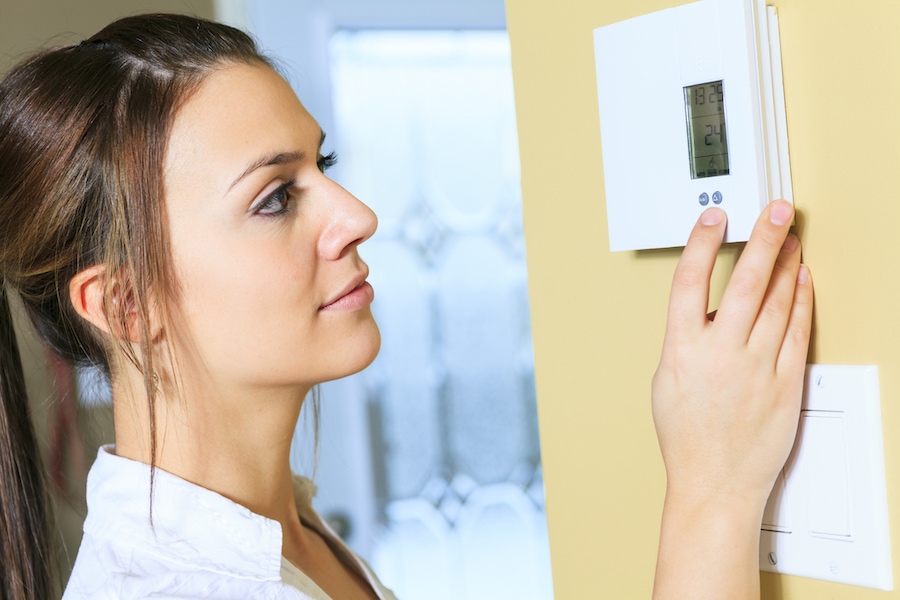
It’s the first really hot day of summer in San Jose when the floor fans and the open windows just don’t cut it anymore. You head over to your thermostat and select “air conditioner” and wait for that refreshing icy air to start blowing out of your vents. When you check a few minutes later, you feel only hot air. Why?
Many reasons can cause an air conditioner to malfunction, resulting in warm or hot air blowing through your vents. Our Air Care Heating & Cooling professionals want to help you diagnose those problems quickly and then get them fixed, so you can cool down your family and your home.
Start at the Thermostat
The thermostat controls when your heating, ventilation and air conditioning (HVAC) system turns on and off, depending on what temperatures you have designated. When your air conditioning system blows hot air, start by checking your thermostat.
Be sure it’s set correctly and not set to heat. You need to set your thermostat to cool, being sure you’re not only setting the fan function. If you are sure you have it set correctly, there may be an issue with how your thermostat is sending messages to your HVAC system or some other problem. Call us to come out and fix the issue for you.
Lack of Air Circulation
Air conditioners need plenty of air circulation to operate correctly. Start by checking your air filter and being sure it’s clean. Clean air filters can not only improve your air conditioner’s performance but can help save significant amounts of energy.
Then, head on outside and be sure your unit is not buried under leaves, grass, weeds or other yard debris. If there are things blocking the outside unit, take the time to clear them away. Once that’s taken care of, check the inside unit for any blockages or clogs that may be restricting airflow there.
Too Much Ice
Sometimes restricted airflow and dirty condenser coils can cause a buildup of ice on the outside portion of your air conditioning system. If too much ice builds up, it can cause your air conditioner to malfunction and blow only hot air.
If a great deal of ice exists, you may need to turn off your entire system and allow it to defrost. Once the ice melts, clean the condenser coils, and turn your system back on to see if it functions properly. If it doesn’t, call one of our professionals to help.
Low Refrigerant Levels
Your air conditioner needs a certain level of refrigerant at a particular pressure to operate efficiently. If you have a refrigerant leak or you notice your refrigerant levels are low, you’ll need to call a professional to come in and replenish the refrigerant.
This is a toxic, regulated chemical, so it’s important to rely on our experts to assist with this problem. Refrigerant leaks are damaging to the environment, so be sure to get that repaired as soon as possible.
Mechanical Problems
An air conditioner has many complex parts, and if any of them malfunction, it can cause your unit to blow hot air. If you cannot resolve your air conditioning problem with simple fixes, it may be time to call an HVAC professional to inspect your air conditioning system.
One of our trained technicians can check the condition of your blower, condenser, and evaporator as well as be sure your electrical connections are secure and working correctly. You’ll have the added benefit of having a professional give your air conditioning system a complete cleaning and tune-up, which should help you minimize repair bills over the long term.
Call Air Care Heating & Cooling Today
When you can’t figure out why your air conditioner is blowing hot air, contact our trained professionals at Air Care Heating & Cooling in San Jose, CA, for help. Call 408-463-6957 or request service online today.
Message Us
Contact us below.
Call Us
(408) 317-2950
For General Inquiries
Have a project in mind?
To get started, request an estimate.